The PicoSure laser – and why it matters to you
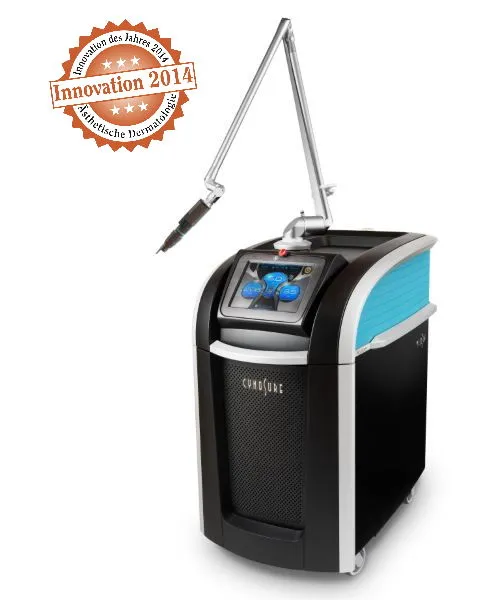
Not every laser is the same. Older nanosecond devices heat the ink until it breaks apart – that strains the skin and needs many sessions. The PicoSure by Cynosure works with pulses of trillionths of a second: the pigments are shattered mechanically, not burnt.
Fewer sessions
The body breaks down smaller particles faster. Where 10 to 15 appointments used to be necessary, 3 to 6 are usually enough today.
All colours
The 755 nm wavelength tackles black, blue and green particularly well – exactly the colours other lasers fail at.
Gentler on the skin
Less heat means less pain, less swelling and a significantly lower risk of scarring.
Medically approved
FDA-approved medical device, in use since 2014 – not an imported device from an online shop.
Picosecond versus nanosecond
The same tattoo, two lasers: the original on the left, after 20 sessions with a classic nanosecond laser in the middle, after 6 sessions with the PicoSure on the right. That's the difference you notice in your calendar and your wallet.
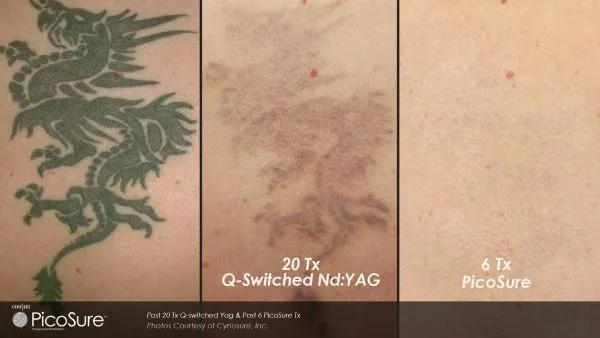 Photo: Cynosure
Tattoo removal explained simply
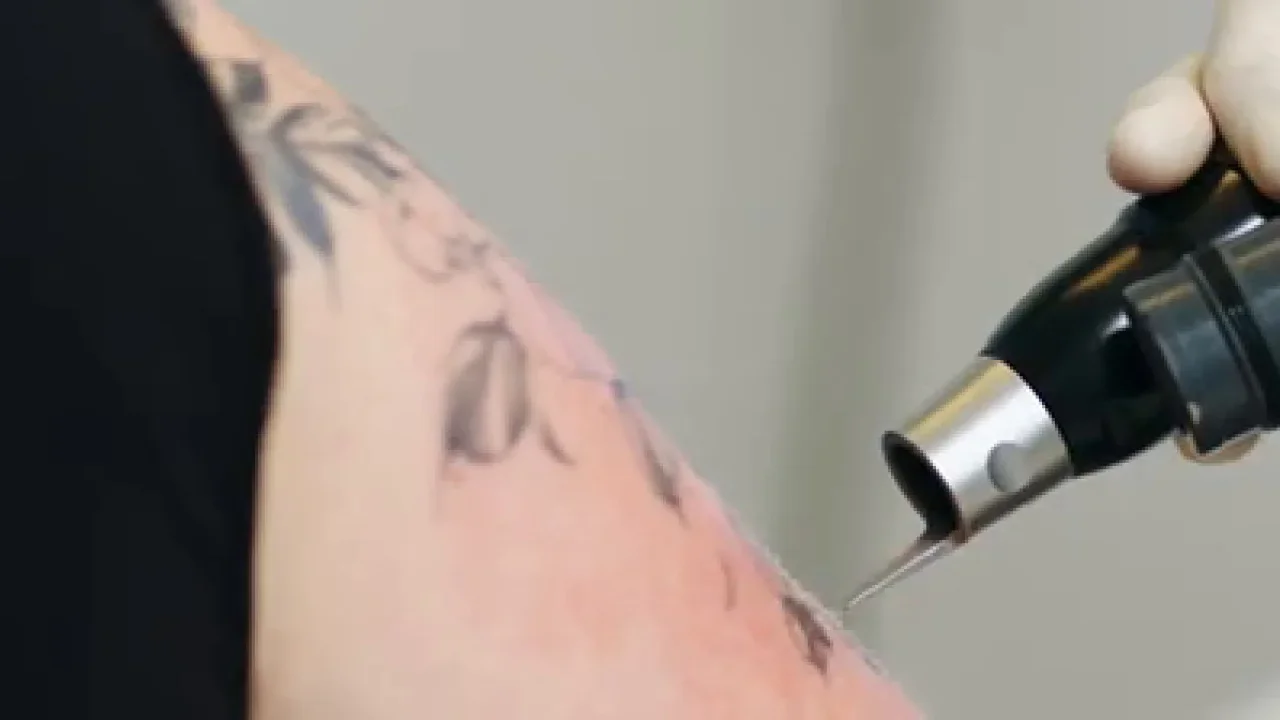
Andreas Baumgärtner interviewed by Beauty TV (in German): how the PicoSure works, what a treatment costs and what to look for when choosing a provider. The video is only loaded from YouTube after you click.
Safety is mandatory in Switzerland
Since 1 June 2024, laser tattoo removal may only be performed by people holding a Swiss federal certificate of competence under V-NISSG. We meet this requirement and are happy to show the certificate on request. Ask every provider about it – it's your skin.